
Two Rookies, One 4Runner & a Whole Lot to Learn
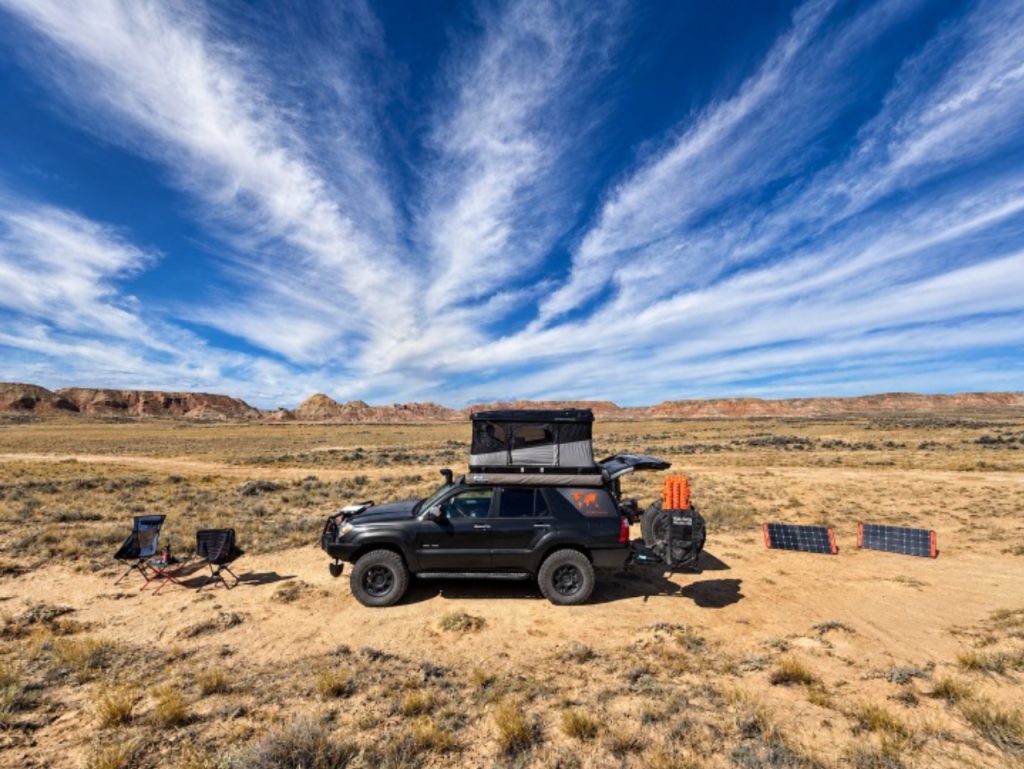
When we drove away from home in YOLA, we knew how to drive her.
We knew how to pack her.
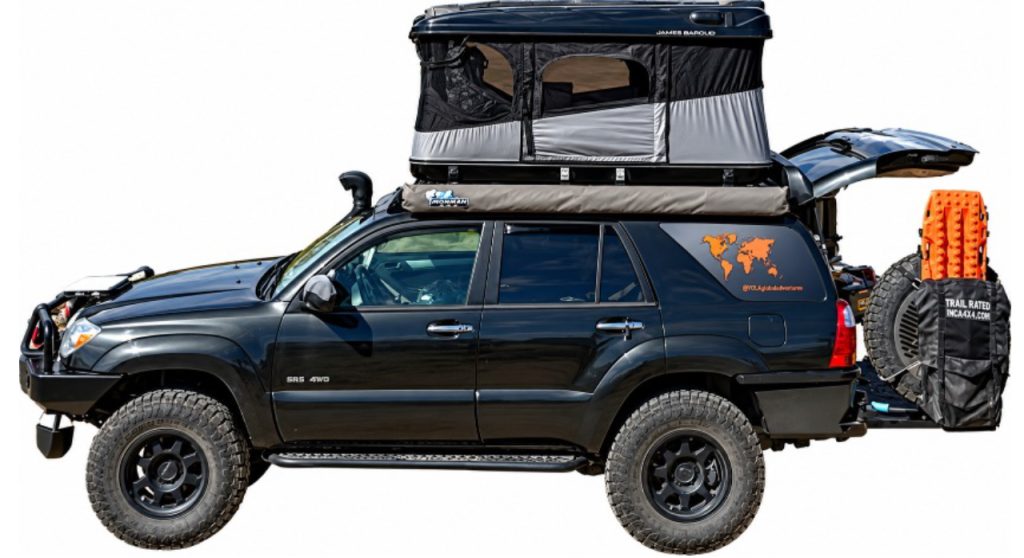
We knew where the rooftop tent, stove, water, recovery gear, and all of our carefully organized belongings belonged.
But did we really understand how everything worked?
Not even close.
Neither of us is a mechanic. We’re certainly not electricians. And although we spent months preparing YOLA, our 2008 Toyota 4Runner, for a journey around the world, we’re discovering there’s a big difference between owning an overland vehicle and truly understanding one.
Somewhere along the way, YOLA became more than our vehicle.
She became our transportation.
Our kitchen.
Our bedroom.
Our storage room.
Our power station.
Our home.
And apparently…
our classroom.
Welcome to Learning YOLA.
When Off-Grid Really Means Off-Grid
One of the things we love most about overlanding is finding a beautiful place in the middle of nowhere, opening the rooftop tent, putting out our chairs, and simply staying awhile.
No campground.
No hookups.
No electrical outlet conveniently waiting nearby.
Just us, YOLA, and whatever power we brought with us.
That’s when you discover very quickly whether you actually understand your electrical system.
We thought we did.
YOLA has an AGM battery system that powers our refrigerator and other equipment. We also carry a Jackery portable power station and solar panels, giving us another way to generate and store electricity when we’re camping off-grid.
Then we added another piece of equipment to the equation: our PeakDo entertainment system.
And that’s where our little electrical education began.
Everything Was Working… Until It Wasn’t
For a while, everything seemed fine.
The refrigerator was running.
Our batteries were supplying power.
We were using the PeakDo.
Life was good.
What we didn’t fully appreciate was how much energy we were consuming—and, more importantly, where that energy was coming from.
When the PeakDo battery needed charging, we were plugging its charger into our system.
Charge it.
Use it.
Charge it again.
No big deal.
Except every time we did that, we were asking our AGM battery bank to supply another electrical load.
And because we weren’t regularly checking our voltage, we didn’t realize how far down we were drawing our batteries.
Until the refrigerator shut down.
11.25 Volts
At first, we wondered if something was wrong with the refrigerator.
Was it broken?
Had something come loose?
Was there another problem with YOLA?
Then we pulled out something we already owned but hadn’t been paying nearly enough attention to:
our voltmeter.
The reading?
11.25 VOLTS
Uh-oh.
We may not be electrical experts, but even we knew that number deserved our attention.
What we began to understand was that the refrigerator wasn’t necessarily the problem.
It was trying to tell us there was a problem.
Its low-voltage protection had shut it down rather than continuing to pull power from an already depleted system.
And suddenly, all those little things we’d been doing started making more sense.
The PeakDo charger.
The refrigerator.
Our other electrical loads.
Several days sitting off-grid.
And two people who weren’t paying nearly enough attention to what was going out versus what was coming back in.
Apparently, YOLA University was officially in session.
The Missing Cord
And because one lesson at a time would apparently have been too easy, we discovered another little problem.
We were missing a cord we needed.
Somewhere in all the preparation, packing, organizing, reorganizing—and probably reorganizing what we’d already reorganized—we had managed to leave behind something we actually needed.
Another lesson.
Having the equipment isn’t particularly helpful if the cord that makes it work is sitting somewhere else.
So now our electrical lesson had become a packing lesson too.
Welcome to overlanding.
Changing the Way We Manage Power
Once we started understanding what was happening, the solution wasn’t simply to stop using everything.
It was to become smarter about where our power was coming from.
Instead of repeatedly using YOLA’s AGM battery system to recharge the PeakDo battery, we could use our Jackery and solar panels for that job.
Let the sun help recharge the Jackery.
Let the Jackery handle the PeakDo.
And take some of that additional demand off YOLA’s AGM batteries.
Simple?
In hindsight, yes.
Obvious to two people who had never lived this way before?
Apparently not.
But that’s exactly what this journey is teaching us.
Then We Started Driving
After discovering that 11.25-volt reading, we got back on the road.
YOLA’s alternator began doing what it was supposed to do—putting energy back into the system while we drove.
About two hours later, we checked the voltage again.
12.65 VOLTS
Now that was a number we were much happier to see.
And standing there looking at the voltmeter, something clicked.
Not just electrically.
For us.
We were beginning to understand YOLA a little better.
What 11.25 Volts Taught Us
We’re certainly not electrical experts now.
But we’re learning.
And if our experience can help another new overlander avoid the same mistake, then that 11.25-volt wake-up call was worth it.
Know what is drawing power.
A battery charger can become an additional load when you’re repeatedly using your main battery bank to recharge another battery.
Use your voltmeter.
We had one. We just weren’t using it. Now we do.
Pay attention when an appliance shuts down.
Our refrigerator wasn’t necessarily broken. Its low-voltage protection was telling us something about our electrical system.
Separate your loads when you can.
For us, that means using the Jackery and solar panels to handle the PeakDo rather than continually pulling that energy from the AGM system.
Have a plan for staying off-grid.
If you’re going to sit in one place for several days, understand where your energy is going and how you’re going to put that energy back into the system.
And perhaps most importantly:
Know what you don’t know.
We’re comfortable admitting that we’re not mechanics or electrical experts.
When something is beyond our knowledge, we ask questions.
We research.
We reach out to people who know more than we do.
And when necessary, we get professional help.
Because the goal isn’t to prove that we can figure everything out ourselves.
The goal is to keep YOLA—and ourselves—safe and moving down the road.
We’re Still Learning
When we left home, we didn’t have all the answers.
We still don’t.
But maybe that’s one of the unexpected joys of this journey.
Every problem becomes a lesson.
The battery issue taught us about power management.
The refrigerator taught us about low-voltage protection.
The missing cord taught us to double-check what we pack.
And the people we’ve met along the way continue to remind us that we don’t have to figure everything out alone.
We’re becoming students of YOLA.
Students of the road.
Students of this strange and wonderful life we’ve chosen.
Sometimes being an overlander means waking up to a spectacular mountain view.
Sometimes it means chasing a mysterious vole out of your vehicle.
And sometimes it means standing beside your 4Runner with a voltmeter in your hand, staring at:
11.25 VOLTS
…and wondering what the heck just happened.
Then driving for two hours.
Checking again.
12.65 VOLTS
And smiling.
Because you learned something.
You solved a problem.
And now you know there’s still a whole lot more to learn.
We’re still two mechanically inexperienced travelers.
Still learning.
Still asking questions.
Still figuring out how all the pieces of YOLA fit together.
But we’re getting better.
Two rookies.
One very capable little 4Runner.
A whole lot left to learn.
And one epic overland adventure still ahead.
— John & Kristi